Deine Datenschutz-Einstellungen
Wie in unserer Datenschutzrichtlinie beschrieben, erfassen wir personenbezogene Daten aus Ihren Interaktionen mit uns und unserer Website, unter anderem durch Cookies und ähnliche Technologien. Wir können diese personenbezogenen Daten auch an Dritte, einschließlich Werbepartner, weitergeben. Wir tun dies, um dir Werbung auf anderen Websites zu zeigen, die deinen Interessen besser entspricht, und aus anderen Gründen, die in unserer Datenschutzrichtlinie beschrieben sind.
Die Weitergabe personenbezogener Daten für gezielte Werbung auf der Grundlage deiner Interaktion auf verschiedenen Websites kann nach bestimmten Datenschutzgesetzen der US-Bundesstaaten als "Verkauf", "Weitergabe" oder "gezielte Werbung" betrachtet werden. Je nachdem, wo du wohnst, hast du möglicherweise das Recht, dich von diesen Aktivitäten auszuschließen. Wenn du von diesem Recht Gebrauch machen möchtest, befolge bitte die nachstehenden Anweisungen.
Wenn du unsere Website mit aktiviertem Global Privacy Control Opt-Out-Signal besuchst, behandeln wir dies, je nachdem, wo du dich befindest, als eine Aufforderung zur Ablehnung von Aktivitäten, die als "Verkauf" oder "Weitergabe" personenbezogener Daten oder als andere Verwendungen angesehen werden können, die als gezielte Werbung für das Gerät und den Browser, mit dem du unsere Website besucht hast, angesehen werden können.
At NobleSeals, we bring history to life through the recreation of equestrian and
great seals used by medieval kings, queens, and nobility, as well as the coats
of arms of sovereign nations. These seals were not just symbols of authority
but vital tools in authenticating documents and signifying power. Seals were used across medieval society by nobility, guilds, city-states, and landowners to certify agreements and correspondence.
Our mission is to revive the seals of the most notable knights and historical
figures, allowing you to seal your letters with the same gravitas as those who
shaped history.
Types of Seals
Great Seals of the Realm
Great Seals have been used since the medieval period as instruments of sovereign
authority, authenticating important state documents such as charters,
proclamations, and treaties. In England, the use of a Great Seal was formally
introduced by Edward the Confessor in the 11th century. The Great Seal is
traditionally double-sided, created using two separate matrices—one for the
obverse and one for the reverse. The front (seal of majesty) usually depicts the monarch
enthroned, surrounded by their official title in Latin, symbolising their role
as sovereign ruler. The reverse (equestrian counterseal) commonly shows the monarch on
horseback, encircled by the same or a variant of their title, reflecting their
role as military leader and defender of the realm. These seals served not only
as legal validation but also as powerful expressions of royal identity and
legitimacy.
Equestrian Seals
Equestrian seals were a prominent form of heraldic and official imagery throughout the medieval period, particularly among monarchs and high-ranking nobles. These seals typically featured the figure of a mounted knight or ruler, armed and armoured, often carrying a shield and banner bearing their coat of arms. First appearing in the 11th and 12th centuries, equestrian seals were closely associated with the ideals of knighthood, martial prowess, and feudal authority. They symbolised the bearer’s role not just as a sovereign or lord, but as a warrior and protector of the realm. Used to authenticate charters and other legal documents, these seals conveyed both power and legitimacy. In the case of monarchs, equestrian imagery often formed the reverse of the Great Seal.
Usage Guide
Medieval wax seals were traditionally made from a blend of beeswax, pigments, and resin for durability. Modern sealing waxes often use polymer blends, making them highly durable, and can be purchased from websites such as eBay or Amazon.
50mm seals are best used in combination with large glue guns and large wax sticks due to amount of wax required.
30mm seals can be used with small glue guns or wax spoons.
About the Owner
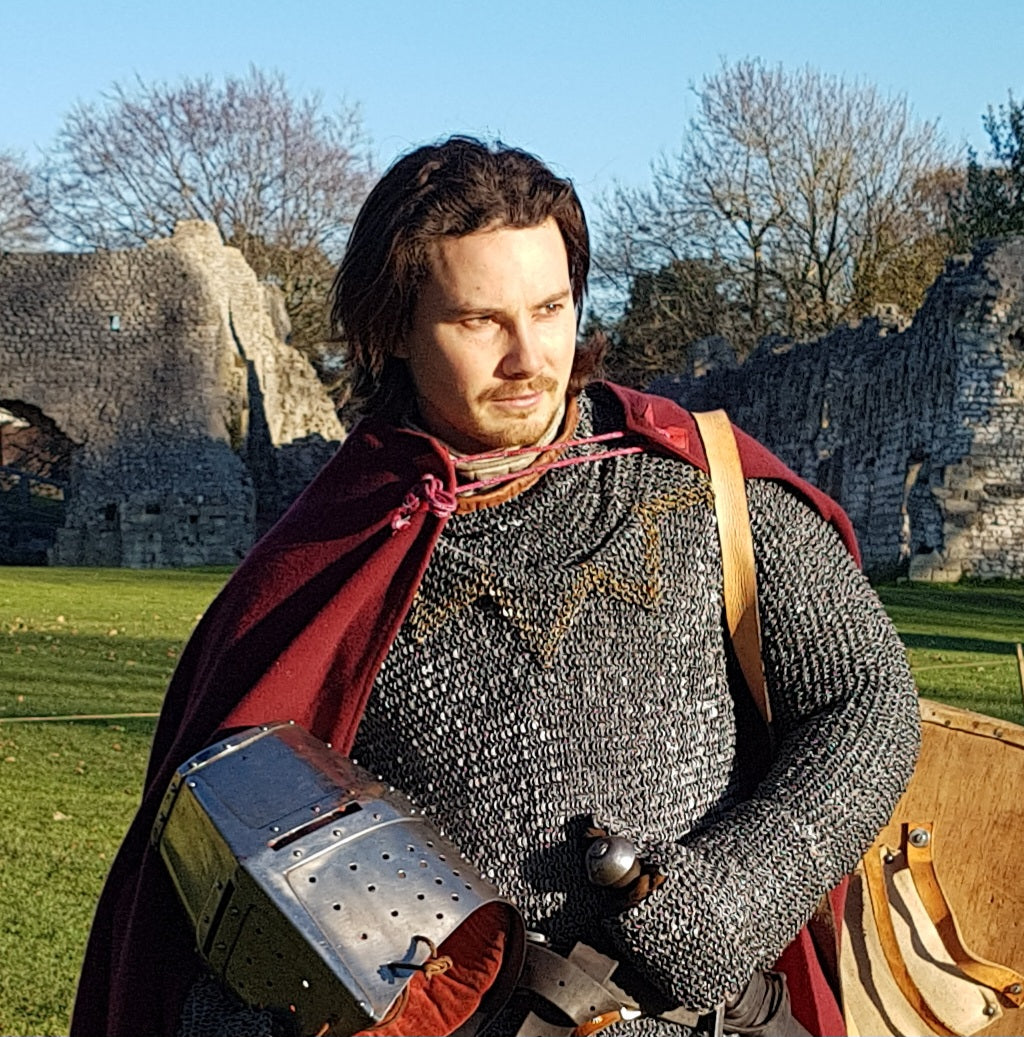
Hello, I’m Douglas, the founder of Noble Seals. My passion for history, particularly the medieval period, has been a lifelong journey.
As an avid medieval reenactor, I have a long background in both sport fencing and Historical European Martial Arts (HEMA), specialising in medieval longsword. I also practise traditional archery with the famed English longbow.
Academically, I studied paleo-environmental sciences with a BSc in Biogeography at Brighton University, followed by an MSc in Geoecology and an MA in Environmental Archaeology at Umeå University in Sweden. These studies focus on reconstructing
past environments which ties into medieval history and the eventual creation of Noble Seals
Outside of this, I work as an ecological consultant, protecting wildlife in England.